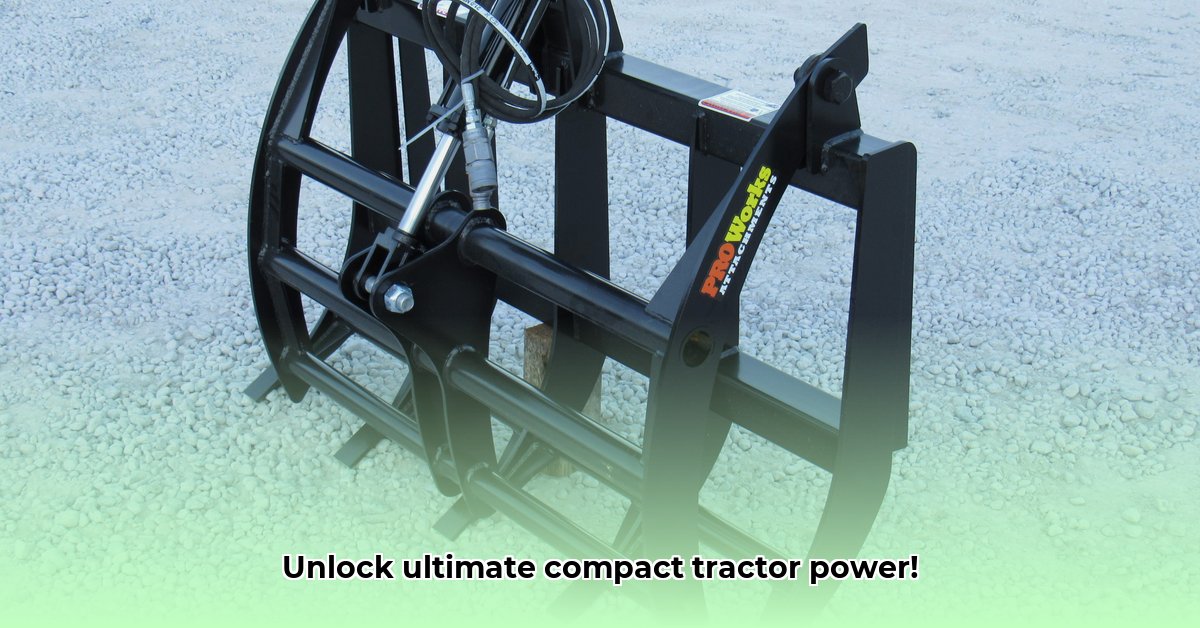
Choosing the right 48-inch grapple for your compact tractor is crucial for efficient and effective work. This buyer's guide compares two popular models – the MTL and Depot – to help you make an informed decision. We'll analyze key features, address potential risks, and offer actionable recommendations for both small-scale farmers and equipment dealers. For more compact tractor attachments, see our comprehensive guide.
48" Grapple Comparison: MTL vs. Depot
Two prominent 48-inch grapples frequently considered for compact tractors are the MTL and Depot models. Both are designed for tractors under 45 horsepower and boast quick-attach compatibility. However, significant differences exist in their specifications and performance.
Head-to-Head Specifications: MTL vs. Depot
The following table directly compares the key features of the MTL and Depot 48-inch grapples:
| Feature | MTL 48" Root Grapple | Depot 48" Root Grapple | Analysis |
|---|---|---|---|
| Weight | 350-385 lbs | 296 lbs | Lighter Depot offers better fuel efficiency and maneuverability; heavier MTL potentially provides greater strength. |
| Max Opening Width | 41 inches | Unspecified (likely smaller) | MTL's wider opening allows for handling larger volumes of material in a single grab. |
| Cylinder Size | 2" x 10" | 2" x 8" | The MTL's larger cylinder suggests superior lifting capacity and power. |
| Material | A36 High-Strength Steel | Steel (type unspecified) | A36 steel offers superior durability and longevity compared to the unspecified steel of the Depot model. |
| Quick-Attach Compatibility | Yes | Yes | Both ensure easy attachment and detachment, increasing operational efficiency. |
| Price | $[Insert Price] | $[Insert Price] | Price is a critical factor in the decision-making process. |
Figure 1: (Insert a bar graph visually comparing weight, opening width, and lifting capacity – data from the table above).
Feature Analysis: Strengths and Weaknesses
The choice between the MTL and Depot depends largely on your specific needs and priorities.
MTL 48" Root Grapple: Its heavier build and larger cylinder suggest superior lifting capacity, ideal for tackling tough, densely packed materials like stubborn roots or heavy brush. The A36 steel construction ensures durability and longevity, making it a worthwhile investment for frequent, demanding use. However, its heavier weight translates to increased fuel consumption and potentially reduced maneuverability in tight spaces.
Depot 48" Root Grapple: The Depot's lighter weight contributes to better fuel efficiency and maneuverability. It’s a better choice for smaller farms or those prioritizing fuel economy. However, the lack of specification regarding the steel type raises concerns about its long-term durability and suitability for arduous tasks. The smaller cylinder likely results in reduced lifting power compared to the MTL.
Actionable Recommendations
For Small-Scale Farmers:
- Assess your needs: What materials will you be moving most often? (e.g., light brush, heavy roots, etc.)
- Check your budget: Balance the initial investment cost against long-term operational costs (fuel efficiency).
- Consider your tractor: Ensure your tractor's hydraulic capacity and lifting strength are sufficient for the chosen grapple.
- Prioritize durability: If you regularly handle dense material, the MTL's A36 steel is a better long-term investment despite the higher initial cost.
- Prioritize fuel efficiency: If fuel economy is paramount, the Depot might be a more suitable choice, acknowledging the potential trade-off in durability.
For Equipment Dealers:
- Stock diversely: Offer both MTL and Depot models to cater to the varied needs of your customer base.
- Provide detailed comparisons: Educate customers on the key differences to guide them towards the best fit.
- Emphasize warranties: Highlight warranty information to build customer confidence.
- Strategic pricing: Evaluate the market and price your inventory competitively while ensuring profitability.
Risk Mitigation Strategies
- Regular Maintenance: Routine inspections and maintenance (including hydraulic fluid checks) are crucial for preventing unexpected failures and maximizing the lifespan of your grapple.
- Safe Operating Procedures: Always adhere to manufacturer's safety guidelines and only operate within the grapple's and your tractor's stated capabilities.
- Supplier Diversification: Engage with multiple reputable suppliers to mitigate potential supply chain disruptions.
- Operator Training: Proper operator training ensures safe and efficient use, minimizing the risk of accidents or equipment damage.
This guide provides a framework for choosing a 48-inch grapple. Remember to conduct thorough research and potentially consult with agricultural equipment professionals before making your final decision. The best grapple for you will depend on your individual needs, budget and operating conditions.